
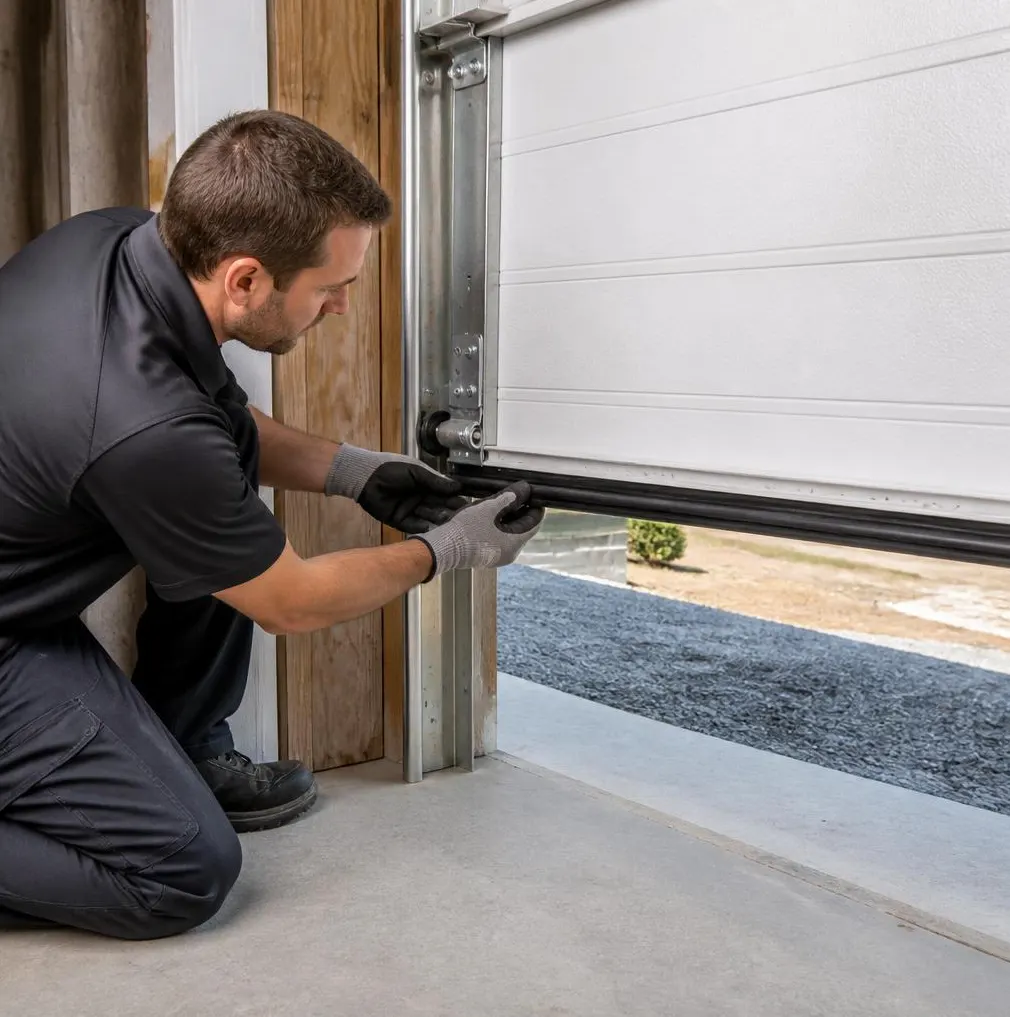
What a technician actually sees on these calls
Most dent calls in this area start the same way: someone clipped the door with a truck tailgate, a trailer hitch, or a trash bin that got away from them in the wind during a dust storm. Sometimes it's a basketball or a kid's bike. The homeowner wants to know if they can just pop it out themselves, and the spouse wants to know if the whole door needs to be replaced. The honest answer is: it depends on exactly where the dent is and what it did to the panel underneath.
Cosmetic dents: the ones you can usually live with (or fix cheap)
A cosmetic dent is one that only affects the outer skin of a steel panel and hasn't pushed the metal past its yield point into a sharp crease. These are typically:
- Small, shallow, and rounded rather than creased
- Located in the flat field of a panel, away from seams, hinges, and rollers
- Not affecting how the door opens, closes, or seats in the track
On a solid, uninsulated steel door, a shallow dent like this can sometimes be pulled or pushed out from the back side, especially if it's caught early. On insulated doors, which make up most installs in this part of Arizona because they help with the heat, the foam core backing the steel panel resists reshaping. Trying to pop a dent out on an insulated panel with a plunger or suction tool often just cracks the paint instead of fixing anything, and paint that's already been baking in the sun for a few summers doesn't flex the way new paint does. In that case the more realistic fix is swapping just that one panel rather than fighting the dent.
Dents that are not just cosmetic
A dent crosses into structural territory when it changes the shape of the panel enough to affect the door's geometry. Signs include:
- A crease or fold, not just a dish-shaped dimple
- The dent sits right at a panel seam, hinge bracket, or roller bracket
- The door rubs, binds, or makes a grinding sound as it travels
- You can see daylight or an uneven gap along the bottom seal or top of the door
- The opener strains, reverses, or takes longer to fully close than it used to
These symptoms mean the dent has pulled a panel slightly out of plane, which throws off how it rides in the track. Even a small-looking dent near a hinge can do this because that's exactly where the panel takes the most stress every time the door cycles. A dent in the bottom panel near the rollers is especially worth taking seriously, since that's also where the door meets the cables and bottom brackets under spring tension.
Why this matters more here than in milder climates
Steel panels that spend summer afternoons at high surface temperatures and then cool off fast on clear desert nights go through more expansion and contraction than panels in a mild climate. A dent that was stable in cooler weather can work itself into a worse crease over a few heat cycles, especially if it's sitting at a stress point like a hinge or seam. Add in UV fading, which makes factory paint and finish more brittle over the years, and a ding that would have just scuffed the finish on a newer door can chip or flake on an older one. Monsoon season also means doors take more hits from wind-blown branches, trash cans, and patio furniture, so a dent that shows up in August or September is often compounded by grit and moisture finding its way into the crease before anyone gets around to dealing with it.
A quick way to settle the argument
Before deciding who's right, walk through this with the door fully closed and then fully open:
- Does the dent have a sharp crease, or is it a smooth dish shape? Creases need a professional opinion.
- Is it within a few inches of a hinge, roller bracket, or where two panels meet? If yes, treat it as potentially structural.
- Does the door open and close smoothly, with even gaps top and bottom? If not, the dent is affecting operation, not just looks.
- Is the opener working harder than usual, or making a different sound? That's a sign the track alignment has shifted.
If the dent fails any of those checks, it's not just a cosmetic argument anymore. It's a safety and function issue, because a door that's binding in the track is putting extra load on the springs and cables, and that's where real problems start.
When to call Vail Garage Door
If the dent is small, flat, and the door still runs true, it's reasonable to leave it alone or get a quote on panel repair. But if you're seeing a crease at a hinge, gaps in the seal, or the opener straining, it's time to call. A technician can tell within minutes whether this is a simple panel swap or something that needs a broader look, including checking spring tension and track alignment while the door is open. For older doors where one bad dent exposes years of UV wear on the rest of the panels, a straightforward repair sometimes turns into a conversation about full garage door installation instead of patchwork fixes. Either way, our garage door repair technicians will walk you through the actual condition of the door before recommending anything.
If you're in Vail, Rita Ranch, or anywhere nearby and you've got a dent you're not sure about, give Vail Garage Door a call. We'll take a look, tell you straight whether it's cosmetic or structural, and get it handled right the first time.