
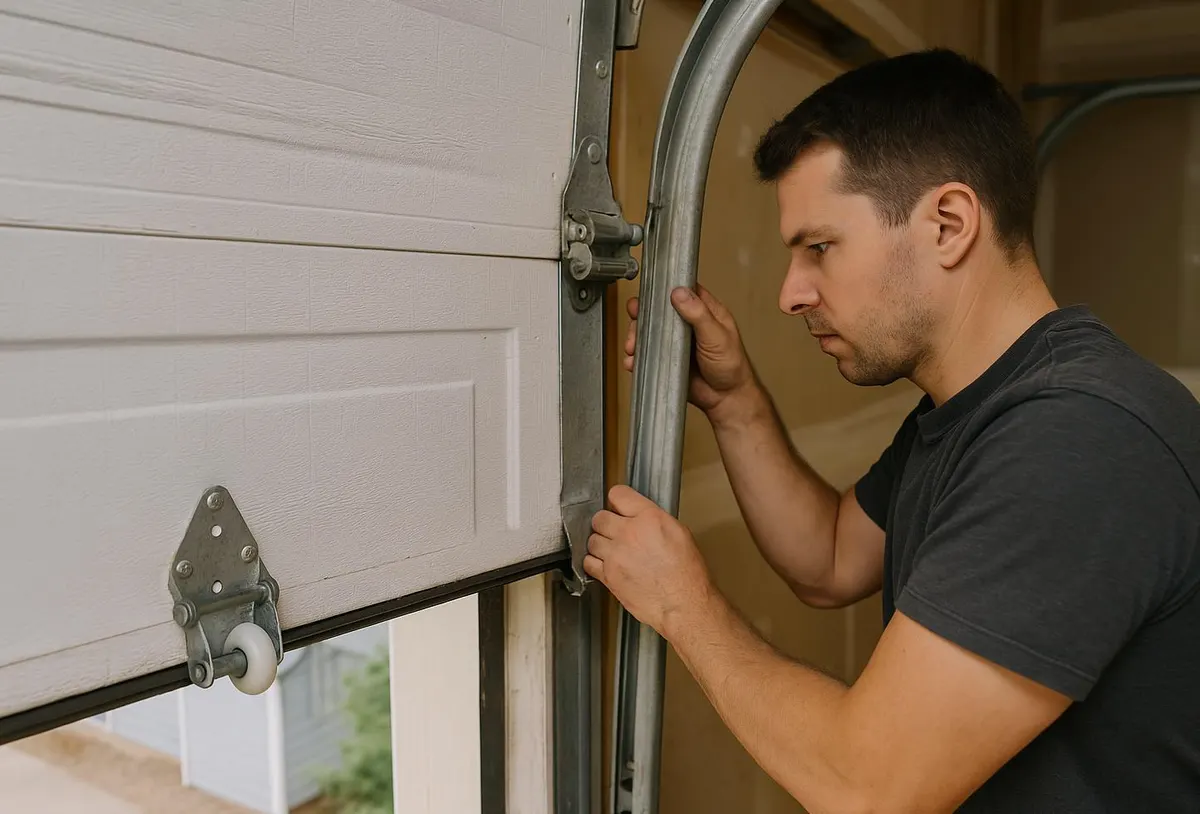
The First Move Most Homeowners Make (And Why It's Tempting)
You notice the door grinding, maybe a roller popped halfway out of the track, and the fix seems obvious: grab a rubber mallet or a pry bar and knock the rail back into place. It looks like simple sheet metal. It's right there in front of you. And the door still opens, so how bad can it be?
The problem is that the track isn't just holding the door's weight — it's fighting the pull of the torsion or extension springs every time the door moves. A track that looks slightly bent is often under real tension, and forcing it back by hand can crack the rail, crush a roller, or send the door jumping the track entirely while it's half open. What looks like a five-minute fix can turn into a door stuck sideways in the opening.
Symptoms That Point to a Track Problem
- Grinding or scraping noise as the door travels, especially near one spot in the run
- Visible gap between a roller and the track it's supposed to ride in
- The door looks crooked or sits unevenly when it's partway open or fully closed
- One side moves faster than the other, giving the door a jerky, racking motion
- Rollers popping out of the track, even if they pop back in on their own
- The opener reverses unexpectedly because the door is binding and the sensor reads it as an obstruction
- A visible bend or dent in the rail itself, usually near a bracket or at head height
Any one of these on its own might be minor. Two or three together usually means the track has shifted out of true and needs a closer look before it gets worse.
Causes, Checked in the Order a Technician Would Look
1. Loose Mounting Brackets
This is the first thing checked because it's the most common. The brackets that hold the track to the framing work loose over time, and the wide temperature swings here speed that up — metal expands in the heat of the day and contracts again on cool desert nights, and that constant cycling backs out bolts and loosens shims. The fix is straightforward: reposition the track with a level, re-torque the bolts, and shim the bracket if the framing behind it isn't perfectly square.
2. Impact Damage
Next comes a check for a direct hit — a car bumper, a bike, a ladder leaned against the rail. Impact damage usually shows up as a sharp kink rather than a gradual bow. Minor kinks near the bottom of the track can sometimes be carefully straightened in place. A sharper bend, or one near a bracket, usually means replacing that section of track rather than trying to save it, since a rebent rail rarely holds alignment for long.
3. Worn or Broken Rollers
If the track itself is straight, the rollers are checked next. Plastic rollers degrade faster under intense UV and heat, developing flat spots or cracking outright. A worn roller wobbles inside the track and pushes outward on it with every cycle, which over months can bow even a healthy rail. The fix is a roller swap, usually to sealed nylon rollers, which hold up better against sun exposure and dry heat than the stock plastic ones.
4. Door Panel Warping
A warped or bowed panel pulls the whole door out of square, which drags the track with it even though the rail itself was never hit. This is checked by watching how the door sits when fully closed. If a panel is the real culprit, straightening the track is a temporary patch at best — the panel needs attention or replacement, or the misalignment will return.
5. Framing or Slab Movement
Houses here sit through dramatic swings between monsoon downpours and long dry stretches, and that moisture cycling can shift soil enough to move a garage's framing slightly over the years. If brackets, rollers, and the door itself all check out fine, the technician looks at whether the opening itself has racked out of square. The fix here is often re-shimming the entire track run and adding bracing rather than a single bracket adjustment.
6. Spring Imbalance
Last on the list, because it's the least obvious: uneven spring tension makes the door lift crooked, which drags one side of the door against its track on every cycle. This shows up as a door that looks fine at rest but visibly tilts while moving. The fix is rebalancing or replacing the springs so both sides lift evenly — and this is not a DIY repair, since torsion springs store enough force to cause serious injury.
When to Call Vail Garage Door
If your door is grinding, binding, or has come off the track, that's a call for garage door repair before the next cycle does more damage to the rail or the rollers. If the door has been fine but it's been a while since anyone's checked the hardware, a garage door maintenance visit catches loose brackets and worn rollers before monsoon dust and the coming cooler nights turn a small issue into a stuck door. We serve Vail, Tucson, Rita Ranch, Corona de Tucson, Sahuarita, Green Valley, Marana, and Oro Valley.
If your garage door is rubbing, racking, or off its track, call Vail Garage Door today and we'll get it running straight again.